
I remember the first time I received an unexpected internet bill that was far higher than usual. There were no obvious changes in my usage habits, yet something quietly consumed more data than I anticipated. That experience made one thing clear: without monitoring network usage, it’s easy to lose control over data consumption.
Monitoring network usage is essential for preventing data overages, especially in households or workplaces where multiple devices share the same connection. Every video streamed, file downloaded, or app updated contributes to overall bandwidth usage. When left unchecked, these small activities accumulate quickly and exceed data limits.
By actively tracking how data flows through your network, you gain visibility into which devices and applications consume the most bandwidth. This awareness allows you to make informed decisions, optimize usage, and avoid unnecessary costs.
Identifying Devices That Consume the Most Bandwidth
One of the first steps in preventing data overages is identifying which devices are responsible for high usage. In a typical home or office network, multiple devices—smartphones, laptops, tablets, smart TVs, and IoT devices—compete for bandwidth.
Some devices may silently consume large amounts of data in the background without your knowledge. For example:
- Smart TVs streaming in HD or 4K
- Cloud backup services syncing large files
- Software updates running automatically
- Gaming consoles downloading updates
To manage this effectively:
- Check your router’s device list to see all connected devices
- Monitor usage statistics per device if your router supports it
- Disconnect or limit unused or idle devices
By pinpointing high-usage devices, you can take targeted actions rather than applying blanket restrictions across your entire network.
Using Built-In Router Tools for Network Monitoring
Most modern routers come with built-in network monitoring features that many users overlook. These tools can provide valuable insights into real-time and historical data usage.
When accessing your router’s admin panel, you may find:
- Data usage summaries by device
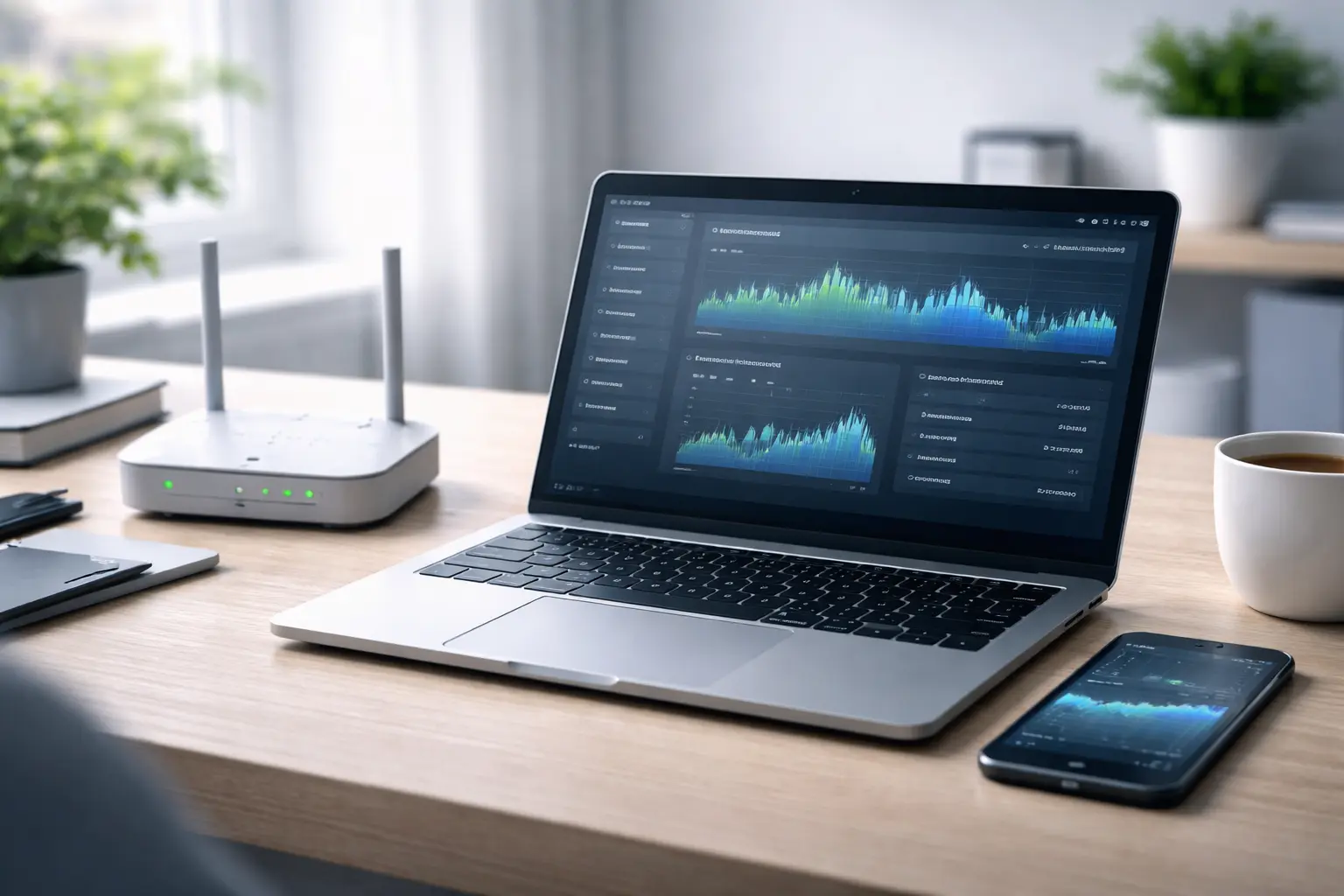
- Real-time bandwidth consumption graphs
- Traffic prioritization settings (QoS)
- Connected device management
Using these features allows you to:
- Identify peak usage times
- Detect unusual spikes in data consumption
- Set limits or prioritize critical devices
If your router supports Quality of Service (QoS), you can allocate bandwidth to specific devices or applications, ensuring that essential tasks (like work or video calls) remain unaffected even during heavy usage periods.
Leveraging Network Monitoring Software and Apps
Beyond router-level tools, dedicated network monitoring software provides more detailed insights. These tools are especially useful if you want granular control over your data usage.
Some common features include:
- Detailed reports of application-level usage
- Alerts when usage approaches predefined thresholds
- Historical data tracking for trend analysis
- Real-time monitoring dashboards
Popular monitoring tools often allow you to:
- Set daily, weekly, or monthly data limits
- Receive notifications when limits are close to being exceeded
- Analyze which apps or services consume the most bandwidth
Using such tools gives you a clearer picture of how your internet is being used across devices and applications.
Setting Data Usage Limits and Alerts
One of the most effective ways to prevent data overages is to proactively set limits and alerts. Instead of reacting after exceeding your limit, you can stay ahead of potential issues.
Here’s how you can approach it:
- Define monthly data caps based on your internet plan
- Set up alerts at 50%, 75%, and 90% usage thresholds
- Use apps or router settings to enforce soft or hard limits
For example, if your plan includes 500 GB per month, setting alerts at 250 GB, 375 GB, and 450 GB gives you multiple checkpoints to adjust your usage before reaching the limit.
These alerts act as early warnings, allowing you to slow down high-bandwidth activities like streaming or large downloads.
Monitoring Streaming and High-Bandwidth Activities
Streaming services and online entertainment are among the biggest contributors to data usage. Watching videos in high resolution, especially 4K content, can quickly consume large amounts of bandwidth.
To manage streaming-related data usage:
- Adjust video quality settings to standard or HD instead of 4K when possible
- Limit simultaneous streaming on multiple devices
- Download content over Wi-Fi instead of mobile data when available
- Monitor streaming habits across different users in the network
Even small adjustments in streaming quality can significantly reduce overall data consumption over time.
Controlling Background Applications and Automatic Updates
Many applications run in the background and consume data without active user interaction. These include operating system updates, cloud storage syncing, and app updates.
To minimize unnecessary usage:
- Disable automatic updates for non-essential apps
- Schedule updates during off-peak hours or when unlimited data is available
- Limit background data usage on mobile devices
- Configure cloud services to sync only when connected to Wi-Fi
Background processes often go unnoticed, but they can collectively contribute to a significant portion of your total data usage.
Optimizing Wi-Fi Settings for Better Data Control
Properly configuring your Wi-Fi network can also help in managing data usage more effectively. While Wi-Fi itself doesn’t consume data, the way it’s used impacts overall consumption patterns.
Consider the following adjustments:
- Set strong passwords to prevent unauthorized access
- Use dual-band or tri-band routers to distribute traffic efficiently
- Place your router in a central location to avoid weak signals and repeated data retransmissions
- Limit guest network usage if not needed
Unauthorized users or poorly configured networks can lead to unexpected data consumption. Securing your Wi-Fi ensures that only authorized devices are using your bandwidth.
Tracking Usage on Individual Devices
In addition to network-level monitoring, many devices offer built-in tools to track data usage at the device level. These tools help you understand how each device contributes to total consumption.
Examples include:
- Mobile phones showing app-wise data usage
- Laptops with network usage statistics in system settings
- Tablets with data usage tracking features
By reviewing this information:
- You can identify apps that consume excessive data
- Adjust app permissions or usage habits
- Restrict background data for specific applications
Device-level monitoring complements network-level tracking and provides a more complete picture of usage patterns.
Creating a Habit of Regular Monitoring
Monitoring network usage should not be a one-time activity. It works best when it becomes part of your regular routine.
A simple weekly or monthly check can help you:
- Spot unusual spikes in data usage
- Identify trends over time
- Adjust habits before reaching data limits
You don’t need to spend hours analyzing data. Even a quick review of your router dashboard or monitoring app can provide enough insight to stay in control.
Consistency is key. The more frequently you monitor, the easier it becomes to maintain efficient data usage.
Practical Example of Managing Data Usage at Home
Consider a household with multiple users:
- One person streams videos daily
- Another works remotely with video conferencing
- Children use tablets for games and online learning
- Smart devices run continuously in the background
Without monitoring, this setup can quickly exceed data limits.
By implementing monitoring strategies:
- The router is configured with usage alerts
- Streaming quality is adjusted during peak hours
- Background updates are scheduled overnight
- High-usage devices are prioritized using QoS settings
As a result, the household maintains stable internet performance without unexpected overages.
Conclusion
Monitoring network usage is one of the most effective ways to prevent data overages and maintain control over your internet consumption. By understanding which devices and applications use the most bandwidth, leveraging router tools, using monitoring software, and setting data limits, you can significantly reduce the risk of exceeding your plan.
Small, consistent actions—such as adjusting streaming quality, managing background updates, and reviewing usage regularly—can make a noticeable difference over time. The key is awareness combined with proactive management.
When you stay informed about your network activity, you not only avoid extra costs but also ensure a smoother and more reliable internet experience for everyone connected to your network.
FAQs
1. What is network usage monitoring?
Network usage monitoring is the process of tracking how much data is consumed by devices and applications on a network. It helps users understand bandwidth usage and prevent exceeding data limits.
2. How can I check my internet data usage at home?
You can check your data usage through your router’s admin panel, internet service provider’s dashboard, or using third-party network monitoring apps that track real-time and historical usage.
3. Why is my data usage so high even when I’m not actively using the internet?
Background activities such as automatic updates, cloud syncing, app refreshes, and connected smart devices can consume data without active user interaction.
4. Can I limit data usage for specific devices on my network?
Yes, many modern routers allow you to set bandwidth limits or prioritize devices using Quality of Service (QoS) settings. Some monitoring tools also provide device-specific controls.
5. What is the best way to prevent data overages consistently?
The best approach is to combine multiple strategies: monitor usage regularly, set data alerts, manage high-bandwidth activities like streaming, control background apps, and use router tools to optimize network traffic.